
Training boxing at home is a great way to improve your fitness, build strength, develop technical skills, and boost your mental toughness—all without the need for a gym or expensive equipment. Whether you’re looking to box for fitness, self-defence, or pursue it as a sport, you can get started with minimal gear and space.
In this guide, we’ll explore how to train boxing effectively at home, covering the fundamentals of boxing, essential training drills, fitness routines, and progression tips.
Setting Up Your Home Boxing Training Space
Before diving into boxing training, the first step is creating a space that’s safe and conducive to practice. You don’t need a fancy gym setup, but a few key elements will make training easier and more enjoyable.
A. Space
You don’t need much room—just enough to move around freely. Ideally, clear an area large enough for shadowboxing, footwork drills, and, if you have one, a punching bag. If space is limited, don’t worry; even a small area can work as long as it’s free of obstructions.
B. Flooring
Boxing involves a lot of footwork and movement, so the type of floor is important. Ideally, you’ll want a soft, cushioned surface that will help prevent injury. If you don’t have a mat, avoid training on hard surfaces like concrete, as this can lead to joint strain. If your flooring is hard, consider using exercise mats or carpets to cushion your movements.
C. Essential Equipment
While you can get started with just your body and basic moves, some essential gear can help enhance your training:
- Hand wraps: Protect your wrists and knuckles when punching.
- Boxing gloves: Essential for hitting the bag and for hand protection.
- Punching bag (optional): A heavy bag is a great tool for practising your punches, but it’s not a requirement for beginners. If you don’t have one, shadowboxing or using a wall-mounted bag can work.
- Speed bag (optional): Helps with rhythm and timing.
- Jump rope: Excellent for cardio and footwork drills.
- Mirror: A large mirror allows you to watch and refine your technique.
Boxing Basics To Get Started
Before launching into specific drills, it’s crucial to understand some basic boxing principles and movements.
A. Stance
Your stance is the foundation of boxing. In a basic stance, keep your feet shoulder-width apart, with your dominant hand (if you’re right-handed, this is your right hand) positioned as the rear hand.
- Orthodox stance: Left foot forward, right foot back (for right-handed individuals).
- Southpaw stance: Right foot forward, left foot back (for left-handed individuals).
Make sure to keep your knees slightly bent, maintaining a balanced posture. Your weight should be evenly distributed, and your hands should be up, protecting your chin while keeping your elbows close to your body.
B. Footwork
Good footwork is key in boxing. It enables you to evade punches, close distance, and create angles for offensive strikes.
- Step in and out: Move forward and backward by pushing off with your rear foot and leading with the front.
- Side-to-side movement: Step laterally to create angles by moving your lead foot first, then following with the back foot.
- Pivoting: Rotate your body to change direction quickly, allowing you to evade or counterattack.
Practice footwork slowly at first, focusing on balance and smoothness. As you progress, try increasing your speed and precision.
C. Punching Techniques
Boxing involves three key punch types: jab, cross, and hook. Each punch has its technique.
- Jab: A quick, straight punch thrown with your lead hand (left hand for orthodox stance). The jab is the foundation of almost all combinations in boxing, helping you control the distance and setting up more powerful strikes.
- Cross: A straight punch thrown with your rear hand (right hand for orthodox stance). It’s a power punch and is usually thrown after the jab.
- Hook: A punch that comes in a circular motion, aimed at the side of the opponent’s head or body. It can be thrown with either hand.
Additionally, you’ll need to practice the uppercut, a punch that comes from below and is typically aimed at the chin.
Training Drills For Boxing At Home
With the basics out of the way, it’s time to dive into some training drills you can do at home to build your boxing skills.
A. Shadowboxing
Shadowboxing is one of the most effective ways to develop your technique and conditioning. It involves throwing punches in the air, focusing on your form, footwork, and defensive movements.
Start by shadowboxing in front of a mirror, if available. Work through combinations of punches, slip movements (dodging punches by moving your head), and defensive techniques like blocking and parrying. Focus on moving fluidly, maintaining your stance, and incorporating your footwork.
Aim for 3–5 rounds of 3 minutes each, with a minute rest in between. You can increase the number of rounds and add more advanced combinations as you improve.
B. Footwork Drills
Good footwork is essential to both defence and offence in boxing. Here are some simple drills to improve your footwork:
- Lateral movement drill: Mark two lines on the floor (about 3 metres apart) and practise stepping side to side, staying light on your feet. Focus on maintaining a balanced stance while moving quickly.
- In and out drill: Practise stepping forward and backward while staying balanced. Ensure your front foot always moves first, followed by the back foot, and vice versa when moving backwards.
- Cone drill: Set up four cones or markers in a square. Move around the cones using various footwork techniques like lateral steps, pivoting, and shuffling.
C. Punching Bag Work
If you have a punching bag at home, you can incorporate it into your routine. The heavy bag is perfect for building power and endurance. Focus on throwing combinations of punches, practising your footwork, and improving your timing and distance.
Start slow, focusing on technique and proper form, then gradually increase your intensity. You can follow a simple structure:
- 1 minute of jabs
- 1 minute of jab-cross combinations
- 1 minute of hooks and uppercuts
- 1 minute of defensive movement and slipping punches
- Repeat for 3–5 rounds, with a 1-minute rest between rounds.
D. Core And Conditioning Work
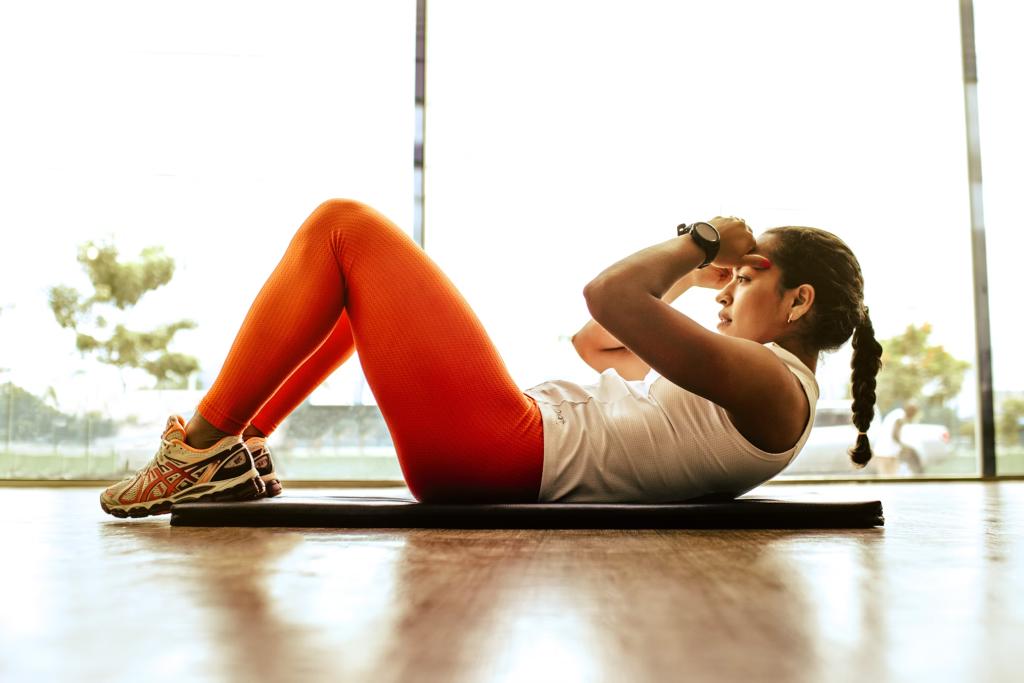
Boxing requires core strength, stamina, and explosive power. Incorporating core exercises and conditioning drills will enhance your performance.
- Planks: Hold a plank position for 30 seconds to 1 minute to strengthen your core.
- Russian twists: Sit on the floor and twist your torso from side to side, engaging your abs.
- Mountain climbers: Perform rapid mountain climbers for 30 seconds to improve your cardiovascular conditioning.
- Jump rope: Jumping rope is an excellent cardio exercise, improving your footwork, agility, and coordination.
E. Interval Training
Boxing is an explosive sport, and interval training mimics the intensity of a real fight. Try performing high-intensity drills (such as sprinting, burpees, or jumping rope) for 30–60 seconds, followed by 30 seconds of rest. Repeat for 10–20 minutes.
Building A Boxing Training Routine At Home
As a beginner, it’s important to start slowly and gradually build your training routine. Here’s an example of a weekly schedule for a beginner boxer:
- Day 1: Shadowboxing + footwork drills (30 minutes), core work (15 minutes)
- Day 2: Rest or active recovery (light cardio, yoga)
- Day 3: Punching bag work (30 minutes), interval training (10 minutes)
- Day 4: Shadowboxing + defensive drills (30 minutes), conditioning (15 minutes)
- Day 5: Rest or active recovery
- Day 6: Punching bag work (30 minutes), footwork drills (15 minutes)
- Day 7: Rest or light activity (walking, swimming, etc.)
As you progress, you can increase the intensity and duration of your sessions, as well as incorporate more advanced combinations and techniques.
Tips For Success In Home Boxing Training
- Consistency is key: Boxing is a skill that takes time and dedication. Stick to your training schedule, and you’ll see improvements in strength, speed, and technique.
- Focus on form: Good technique is more important than throwing powerful punches. Always prioritise form over speed and power to avoid developing bad habits.
- Rest and recovery: Boxing is physically demanding, so ensure you get enough rest between sessions to allow your muscles to recover and grow.
- Stay motivated: Set realistic goals for yourself and track your progress. Whether it’s improving your speed, mastering combinations, or increasing your endurance, having measurable goals will keep you motivated.
- Listen to your body: Boxing involves a lot of repetitive movements, and it’s important to avoid injury. If you experience pain or discomfort, take time to rest or consult a professional.
Conclusion
Training boxing at home is an incredibly effective way to improve your fitness, technique, and mental toughness. With minimal equipment and a bit of space, you can work on developing your skills, whether you’re boxing for fitness, self-defence, or as a serious sport. The key to success is consistency, focusing on good form, and gradually increasing the intensity of your workouts.
As you progress, remember to listen to your body and allow time for recovery, as boxing can be physically demanding. Stay motivated by setting realistic goals and tracking your improvements.
Most importantly, enjoy the process—boxing isn’t just about punches and power, it’s about building confidence, discipline, and resilience.So, lace up your gloves, find a space, and start your journey towards becoming a better, stronger boxer—right from the comfort of your home.
Frequently Ask Question
How Do I Improve My Footwork At Home?
To improve footwork, practice basic drills like lateral movement, in-and-out steps, and pivoting. You can also set up cones or markers to create a mini agility course. The goal is to stay light on your feet, maintain balance, and practice moving in all directions quickly and smoothly.
What Should I Do If I Feel Pain Or Discomfort During Boxing Training?
If you experience pain or discomfort, stop immediately and rest. Persistent pain can lead to injury, so it’s important to listen to your body. Make sure you warm up properly, focus on good form, and avoid pushing through pain. If the discomfort continues, it’s best to consult a doctor or physiotherapist.
How Can I Stay Motivated To Train Boxing At Home?
Set specific, measurable goals like improving your jab speed, increasing your endurance, or learning new combinations. Track your progress and celebrate small victories. Having a routine, mixing up your drills, and rewarding yourself after completing challenging sessions can also help you stay motivated and consistent.
Click Check Here For More Details